SANTAKA
Electronic
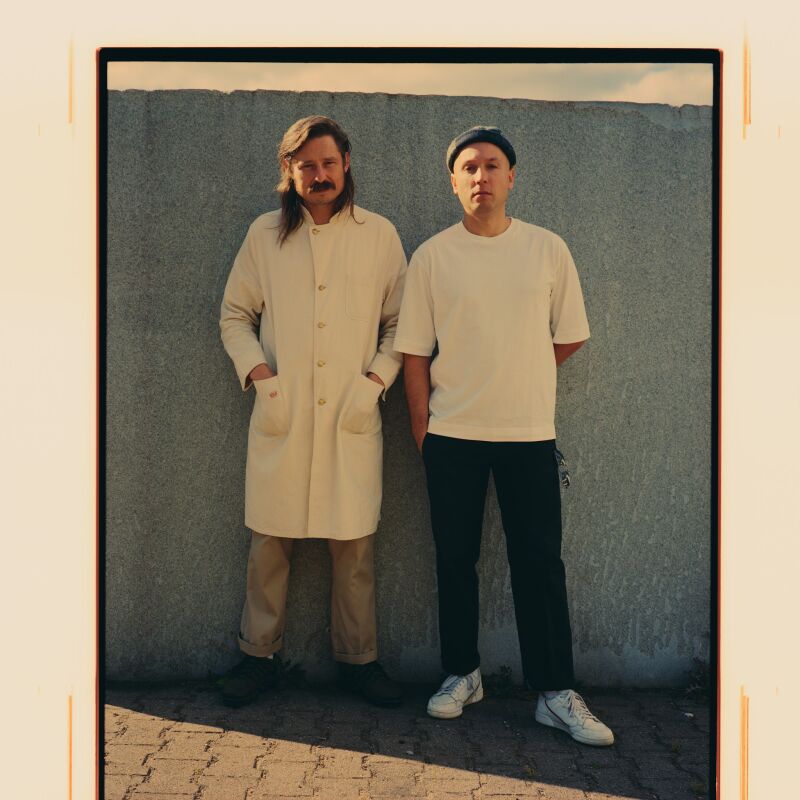
SANTAKA is the collaborative project of Lithuanian drummer and producer Marijus Aleksa and DJ/producer Manfredas Bajelis, born in their hometown of Vilnius. The name, meaning
“confluence” in Lithuanian, reflects the merging of their personal histories, artistic lineages, and wider cultural networks.
Marijus has spent the past decade recording and touring with key players in the contemporary jazz world, including Joe Armon-Jones, Bill Laurance, and Ashley Henry. Manfredas, meanwhile, is a foundational figure in Lithuania’s electronic music scene — a daring club selector, remixer, and co-founder of Dresden alongside Ivan Smagghe. He’s also the force behind Radio Vilnius.
Rooted in a shared reverence for 1970s fusion and experimental records that blurred the lines between jazz, electronic, and world music — from Herbie Hancock’s Rain Dance and Don Cherry’s Brown Rice to the studio tape-splice methods of Miles Davis’s Bitches Brew — Santaka emerged as a dialogue between acoustic and synthetic, structured and improvised. Using an arsenal of drum machines, modular synths, and Marijus’s hybrid percussion setup, the duo began building dense, unpredictable compositions, eventually expanding their sonic palette with contributions from Vilnius’s free and avant-garde jazz communities.
Their debut on Byrd Out introduced a genre-agnostic voice. The Santaka EP for cult Finnish label Sähkö followed, blending fourth world dub and rhythmic machine funk. Their XRAM EP
inaugurated the Radio Vilnius label, featuring virtuosic contributions from wind player Saulius
Petreikis and collaborators from previous sessions, including Khidja’s Andrei Rusu and Mindaugas Vadoklis. A remix by Marco Shuttle pushed the EP further into late-night minimalism.
Their most recent work, released via State51, sees Santaka reinterpreting the compositions of Lithuanian minimalist Rytis Mažulis and the avant-garde choir Melos Collective. These extended pieces — eerie, layered, and deeply rooted in both cultural memory and futuristic sound design — reaffirm Santaka’s commitment to creating living, breathing music that resists categorization.
Whether drawing from jazz clubs, dancefloors, or forgotten archives, Santaka exists in the
confluence — of ideas, generations, and possibilities.